Introduction
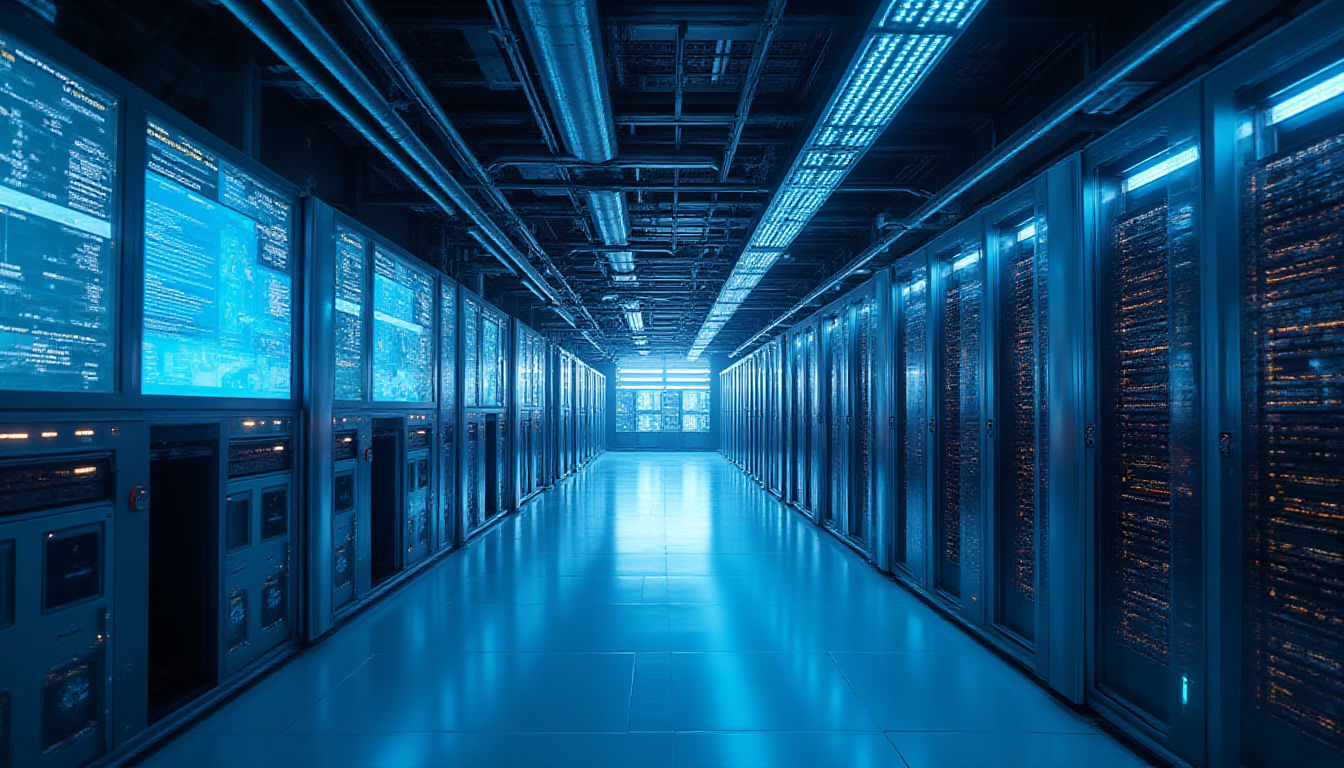
As artificial intelligence continues to evolve and expand its capabilities, the costs associated with supporting these advancements have similarly risen, pushing the boundaries of what’s possible with current data infrastructure. AI data center costs FP8 represent both a challenge and an opportunity for businesses planning to lead in this futuristic landscape. Companies are funneling substantial investments into AI data centers, equipped to handle the rising demands of high-performance computing and state-of-the-art AI infrastructure. The pursuit of reducing energy consumption while maintaining or enhancing output efficiency drives these investments, focusing sharply on the development and deployment of more sophisticated hardware like FP8-quantized models.
Background
The backdrop of this industry transition is set against an astounding financial theater. Rising AI infrastructure deals are a powerhouse driving the projected $3 trillion expenditure on AI-related data centers by 2029, with major industry players such as Nvidia, Google, and Amazon Web Services spearheading this movement (source: BBC). These titans of tech are not just pouring funds to build infrastructure but are also positioning themselves as leaders in a world where data-centered strategies dictate market success. Their significant deals point toward a future where AI infrastructure must not only handle enormous data volumes but also ensure that these operations are sustainable and energy-efficient.
Trend
One of the notable trends in the field is the surge in FP8-quantized models. By minimizing computational needs without compromising performance, these models offer a glimpse into the future of efficient AI processing. Companies like Alibaba, with its development of the Qwen FP8 models, illustrate a strategic shift toward bridging the gap between high throughput and energy conservation (source: MarkTechPost). Simultaneously, titans like Nvidia are committing astronomical funds, such as its $100 billion investment in OpenAI, reinforcing AI’s infrastructure backbone while promoting energy-efficient GPUs (TechCrunch).
This trend is akin to the transformation of transportation — similar to how electric vehicles are reshaping the automotive landscape, FP8 models and energy-efficient GPUs are revolutionizing AI processing by making infrastructure less resource-intensive and more environmentally sustainable.
Insight
Understanding the driving forces behind today’s AI infrastructure can provide insights into optimizing performance while managing costs. A key factor is inference throughput, which influences how quickly AI systems can process and deliver data. Efficiency improvements in this domain are crucial, as demonstrated by Alibaba’s Qwen FP8 models that optimize performance using less memory bandwidth, addressing both cost efficiency and energy consumption.
Furthermore, the development of long-context models offers enhanced performance metrics, supporting applications that demand lengthy data sequences without significant delays. This performance optimization mirrors strategies akin to speculative decoding, where potential outcomes are preemptively calculated, ensuring swifter data processing capabilities necessary for real-time applications.
Forecast
Based on current trajectories, the future of AI data center costs FP8 points towards an ecosystem thriving on efficiency and scalability. As investments in AI infrastructure edge towards the $4 trillion mark by the decade’s close, powered by deals like Oracle’s $30 billion agreement with OpenAI, the underlying energy demands are expected to skyrocket (TechCrunch). The incorporation of speculative decoding and hybrid architectures could mitigate some of these costs by optimizing computational resources more judiciously, potentially leading to breakthroughs in AI performance and sustainability.
Imagining a future where AI systems tap into renewable energy sources as seamlessly as they tune algorithms, enhances the narrative of AI as both an engine of innovation and sustainability.
Call to Action (CTA)
Staying informed about these towering advancements in AI infrastructure is essential for tech enthusiasts, investors, and stakeholders aiming to maintain a competitive edge. Subscribe to our newsletter for the latest insights and analysis on the rapidly evolving world of AI data centers and engage in conversations that shape the future of this cutting-edge industry. Recognizing the importance of AI data center costs FP8 is not just about anticipating tomorrow, but strategically navigating the present. Join us in charting this dynamic landscape, where every innovation paves the way for a sustainable and advanced AI-driven future.